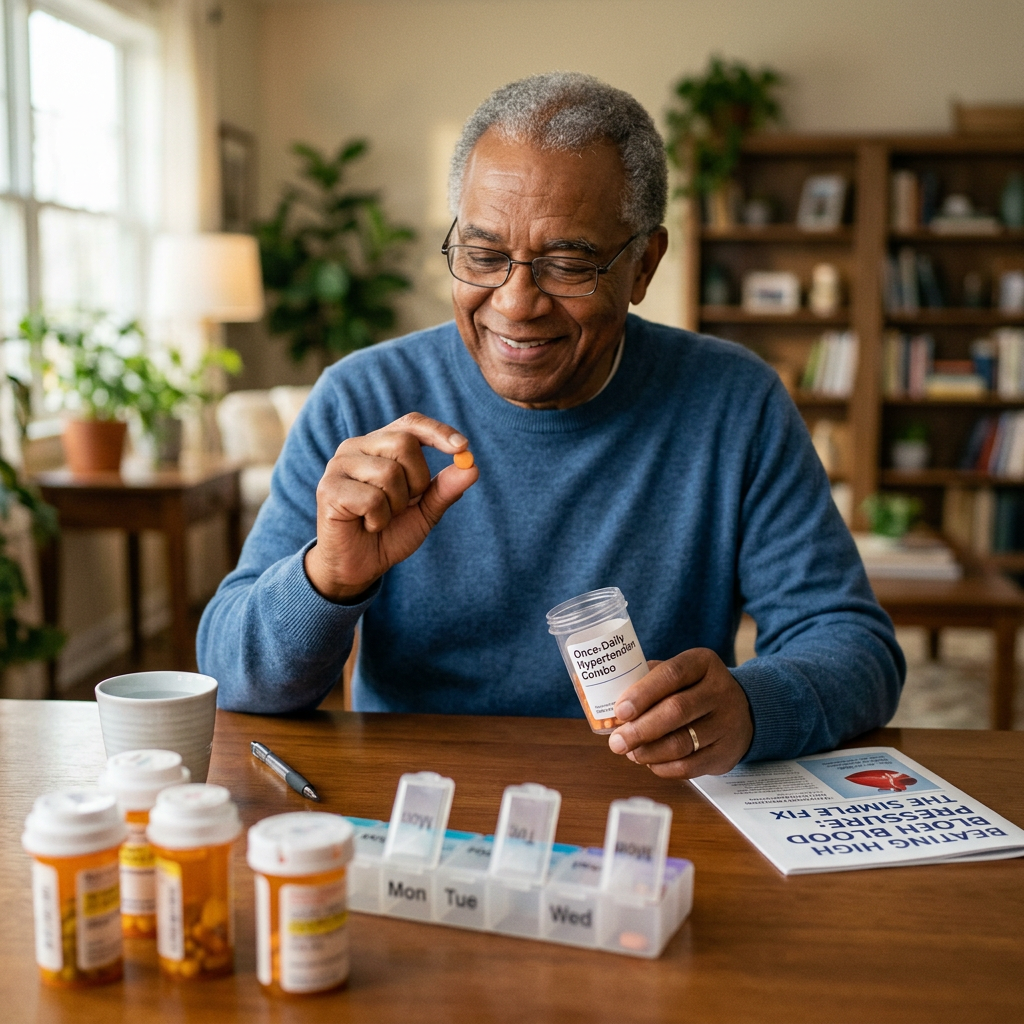
High blood pressure is one of the leading causes of heart attacks and strokes worldwide. There are plenty of drugs to lower it, yet many patients never reach a healthy reading. A new study, presented on November 8, 2026 at the American Heart Association Scientific Sessions and published at the same time in JAMA, shows that the answer may be surprisingly simple.
What the researchers studied
The CATCH trial took place in 40 primary care clinics in Colombia and Jamaica. It enrolled 1,706 adults with uncontrolled hypertension. Their average age was 61, and 70% were women (JAMA research summary).
The clinics were randomly assigned to one of two approaches:
- Usual care, the “stepped care” model: patients start on a single drug, and the doctor raises the dose and adds more drugs over time.
- A single combination pill, one tablet containing two or three active ingredients (valsartan, amlodipine and, if needed, hydrochlorothiazide). Patients also learned to measure their blood pressure at home, nurses reviewed their readings regularly, and a health coach helped them stick to their medication.
The results
After 18 months, the difference was striking (JAMA):
| Measure | Single combination pill | Usual care |
|---|---|---|
| Drop in systolic blood pressure | −19.1 mm Hg | −9.0 mm Hg |
| Blood pressure below 130/80 | 69.5% of patients | 29.2% of patients |
| Serious adverse events | 7.9% | 9.9% |
In other words, more than twice as many patients reached their blood pressure goal with the combination approach, with no increase in side effects.
The effect lasts
Perhaps the most valuable finding is how durable the results were. Six months after the trial ended, 75% of patients were still taking the combination pill, now covered by insurance or government programmes, and were still keeping their blood pressure under control (UT Southwestern).
Why one pill works better
- It is easier to stick with. Remembering one tablet is simpler than remembering three.
- It works faster. A combination targets several causes of high blood pressure at once, instead of waiting months for step-by-step adjustments.
- Teamwork helps. Home readings and feedback from a nurse make it possible to adjust treatment in time.
This approach is already recommended in WHO and American Heart Association guidelines, and the CATCH trial confirms that it works in real-world practice, especially in countries with limited resources.
Limitations
The trial was open-label, meaning patients and doctors knew which treatment they were getting, and it was carried out in only two countries, so the results still need to be confirmed elsewhere. In addition, clinics were assigned to groups before patients were recruited, which may have influenced who took part.
What this means for you
If you take several blood pressure medicines and your readings are still too high, ask your doctor about fixed-dose combination pills. Many are already available at pharmacies. And keep checking your blood pressure at home: it is one of the simplest ways to get better results from treatment.
