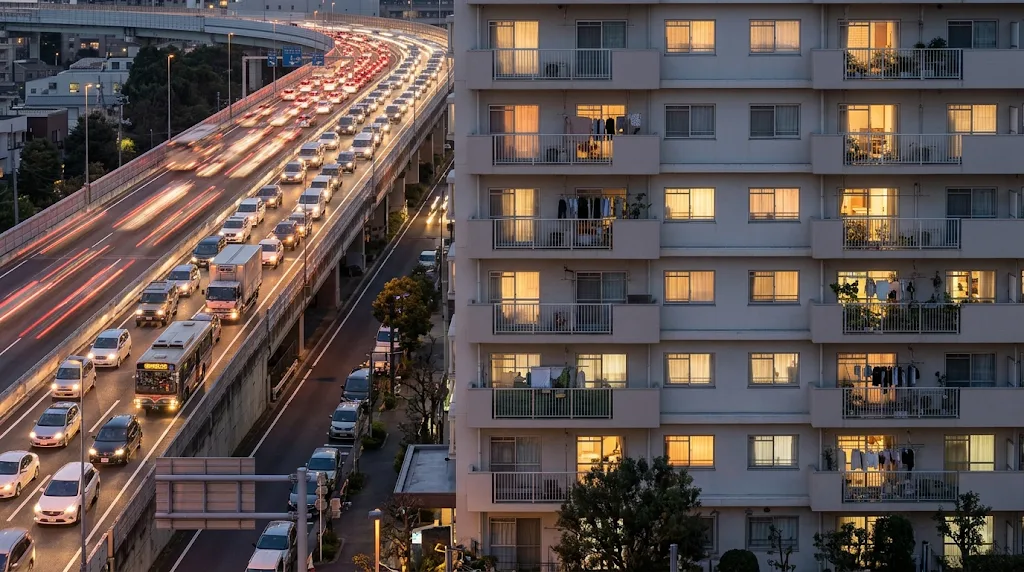
Living Near Busy Roads or Airports May Harm Your Heart, Even if You Sleep Soundly
Many people assume that if traffic noise does not keep them awake, it does no harm. New research presented at the American Heart Association’s Scientific Sessions 2026 suggests otherwise.
The study
Researchers at Massachusetts General Hospital analyzed medical records and lifestyle surveys for 108,051 adults (median age 57, 58% women) in the Mass General Brigham Biobank between 2010 and 2020. They combined these with US government data on average 24-hour noise from road traffic, trains and aircraft near each person’s home (American Heart Association).
About one-third of participants lived with average transportation noise above 50 decibels, and more than half above 45 decibels, roughly the level of moderate rain or typing on a keyboard (Drugs.com/HealthDay).
What they found
- Noise above 50 decibels was linked to an 8% to 10% increase in developing major heart disease risk factors: high cholesterol, high blood pressure and diabetes.
- The strongest link was with high cholesterol, followed by high blood pressure and then diabetes.
- Noise above 50 decibels was also linked to higher odds of a heart attack, stroke or other major heart event.
The key surprise: these links were similar in people with healthy sleep (7 to 9 hours a night) and those with sleep disorders. “Healthy sleep is not protective against adverse heart impacts of noise exposure,” said lead author Dr. Joseph Nguyen (IMechE).
Why noise may affect the heart
Scientists believe chronic noise acts as a stressor, triggering stress hormones and inflammation that over time can raise blood pressure and damage blood vessels, even if you are not consciously bothered by it.
Limitations
The study used existing data, so it cannot prove that noise causes heart disease. Noise was estimated outdoors as a 24-hour average and may differ from what people hear inside their homes. The findings are preliminary until published in a peer-reviewed journal (Knowridge).
Ways to reduce your exposure
- If you are choosing a home, consider distance from highways, rail lines and flight paths.
- Double-glazed windows, heavy curtains and sealing gaps can noticeably reduce indoor noise.
- Sleep in the quietest room of your home if possible.
- Keep up the basics that protect your heart: regular checks of cholesterol and blood pressure, exercise and a healthy diet.