One in Three Babies Diagnosed With Peanut Allergy May Not Actually Have It
A peanut allergy diagnosis changes family life overnight: label checking, EpiPens and constant worry. A new Australian study suggests that for more than a third of babies, that diagnosis may be wrong.
What the study found
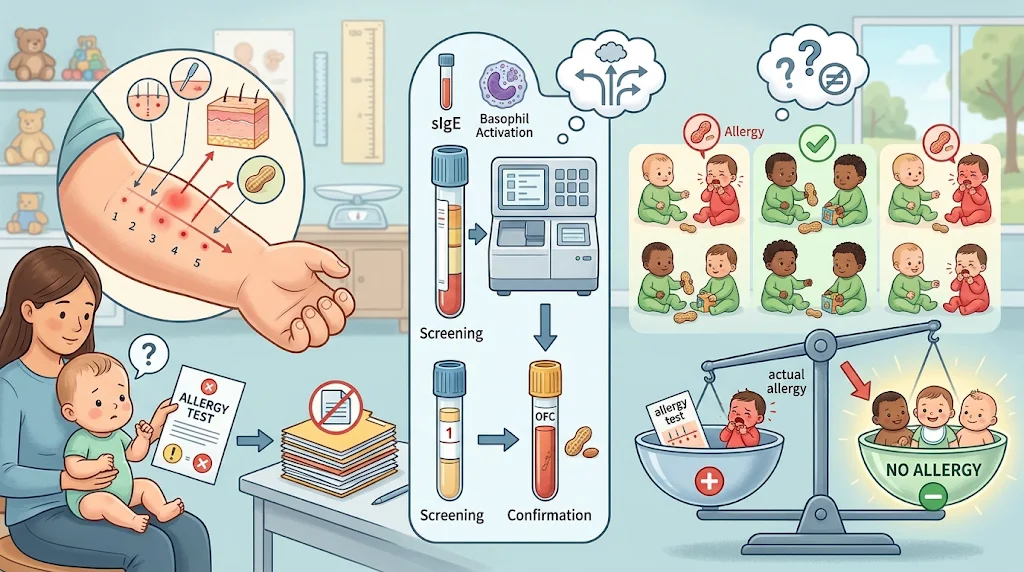
Researchers from the Murdoch Children’s Research Institute and the National Allergy Centre of Excellence assessed 1,275 infants under 18 months at 10 children’s hospitals. All had reacted to peanut and had a positive skin-prick or blood test. Of these, 778 underwent a supervised oral food challenge, in which they were given gradually increasing doses of peanut under medical supervision (Drugs.com/HealthDay).
The results:
- 65% reacted, confirming the allergy.
- 35%, or 271 babies, ate peanut with no reaction at all and had their allergy label removed (The Age).
The findings were published in The Journal of Allergy and Clinical Immunology: In Practice.
Why the standard tests can mislead
Skin-prick and blood tests show whether the immune system is sensitized to peanut, but sensitization does not always mean a child will react when eating it. The tests can also give false positives (Live Science). Researchers also think some infants have a “transient allergy” that fades within months (The Age).
Why it matters
“Clinical history and allergy testing alone were not enough to accurately diagnose peanut allergy in many cases,” said Professor Kirsten Perrett, who leads the program. She recommends that a supervised food challenge “should be routinely considered” before a baby starts oral immunotherapy (CBS News).
Babies who passed the challenge could keep eating peanut regularly, which helps build lasting tolerance.
Important safety warning
This is not something to try at home. About 12% of babies in the challenge had anaphylaxis, a severe reaction, and needed treatment from medical staff (CBS News).
What parents can do
- If your baby was diagnosed based only on a reaction and a test, ask an allergist about a supervised oral food challenge.
- Never reintroduce peanut on your own after a reaction.
- Ask whether your child should be retested periodically, as many early food allergies change over time.